Most deals don’t fall apart because your offer is bad. They fall apart because you stop too soon. You send a proposal, you hear silence, and you assume they’re not interested. Meanwhile, the prospect is busy, distracted, or waiting for one more reason to say yes. Here’s the truth: the majority of sales happen after
Most deals don’t fall apart because your offer is bad. They fall apart because you stop too soon. You send a proposal, you hear silence, and you assume they’re not interested. Meanwhile, the prospect is busy, distracted, or waiting for one more reason to say yes.
Here’s the truth: the majority of sales happen after the first touch. But most entrepreneurs quit at exactly the point when persistence pays off. That’s why follow-up is the single easiest way to double your sales without chasing more leads.
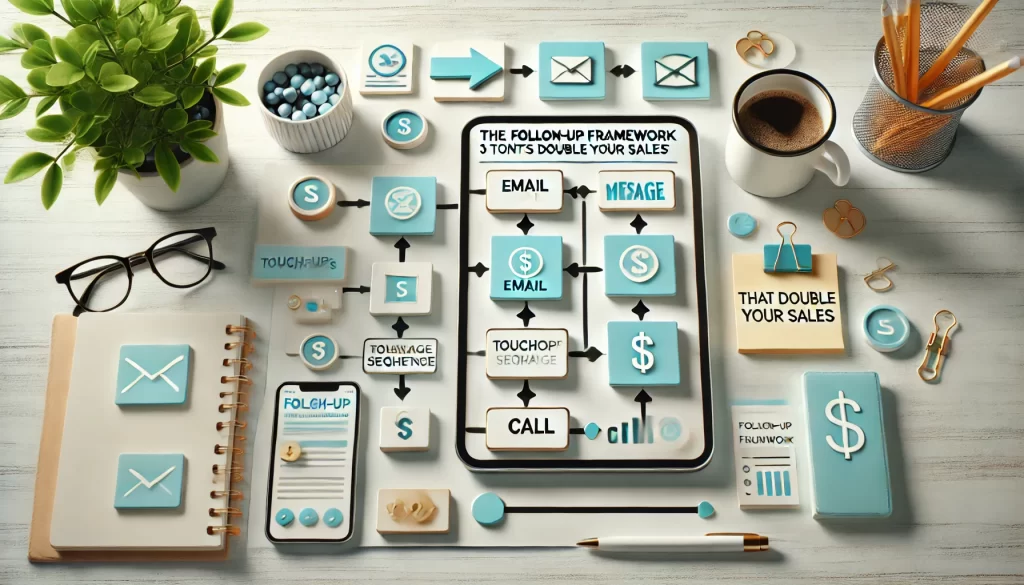
The key isn’t spamming. It’s having a clear, structured framework that keeps you top of mind without being pushy. Here’s the 3-touchpoint sequence that works.
1. The Value Reminder (24–48 Hours) ⏱️
Your first follow-up sets the tone. If you show up with a “just checking in” message, you’ve already lost. That phrase screams desperation. What prospects need at this stage isn’t pressure—it’s clarity.
Most of them didn’t ghost you because they hate your offer. They just got busy, forgot, or needed time to think. That’s why the first touchpoint should remind them of the value they were interested in. You’re not nagging—you’re reconnecting them to the original problem they want solved.
⚡ Power Move: Within 24–48 hours, send a short, focused follow-up that ties your solution back to their pain point. Example:
“Hey [Name], I was thinking about your challenge with [problem]. I wanted to flag that this solution could save you [specific benefit] right away.”
Notice the focus: it’s about them, not you.
2. The Proof Point (3–5 Days) 📊
If they still don’t respond, don’t panic—it’s not rejection. At this point, the real obstacle is doubt. People don’t buy when they don’t trust that what you’re offering will work for them.
That’s where proof comes in. Instead of repeating your pitch louder, you shift to evidence. Show them that others in their shoes have taken the leap and won. Stories are more persuasive than statistics. And social proof is safer than pressure.
⚡ Power Move: Share a testimonial, case study, or quick before-and-after story. Example:
“Totally get where you’re coming from. Another client in [industry] felt the same way—here’s what happened after [timeframe].”
Make it visual if possible (screenshots, numbers, quotes). The goal isn’t to oversell, it’s to make the decision feel less risky.
3. The Personal Nudge (7–10 Days) 👋
By the final touchpoint, you’re not dealing with logic anymore—you’re dealing with inertia. People hate making decisions. They’ll stall forever if you let them. Your job is to give them a polite, human push.
This isn’t about restating your entire pitch. It’s about being direct, respectful, and reminding them that decisions drive progress. A well-crafted nudge can revive a deal that felt dead.
⚡ Power Move: Send a light, no-pressure message that balances urgency with respect. Example:
“Hey [Name], just checking in—should I close this out on my end, or do you want to move forward?”
This works because it does three things at once:
- Shows respect for their time.
- Creates urgency by implying the opportunity is closing.
- Keeps the relationship intact, whether they say yes now or later.
Final Thoughts ⚡
Follow-up is where sales are made. Not on the first email. Not on the perfect pitch. In the touches that come after—when most competitors have already given up.
The framework is simple but powerful:
- Remind them of the value.
- Prove it with evidence.
- Nudge them personally.
Done with structure, follow-up doesn’t feel pushy. It feels professional, human, and trustworthy. And the best part? It’s the cheapest way to increase revenue because you don’t need more leads—you just need to work the ones you already have.
🔑 The fortune isn’t in chasing. It’s in following up with purpose.
Author