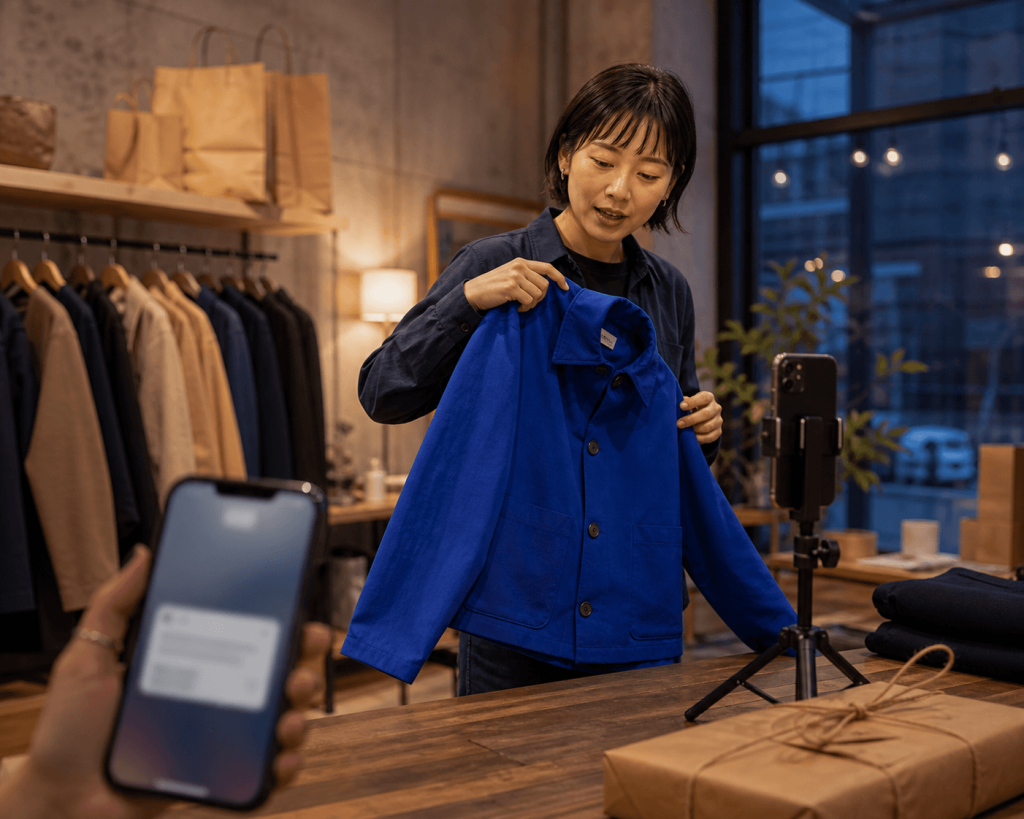
The old customer journey used to get drawn as a funnel. Discover, consider, convert. Very orderly. Very flattering to our spreadsheets. Real life has become more like this: someone sees a 14-second video while waiting for the kettle to boil, sends a message because they have one specific question, and buys if the answer arrives
The old customer journey used to get drawn as a funnel. Discover, consider, convert. Very orderly. Very flattering to our spreadsheets.
Real life has become more like this: someone sees a 14-second video while waiting for the kettle to boil, sends a message because they have one specific question, and buys if the answer arrives without making them feel foolish for asking.
That is not a complete replacement for search, a good website or email. Please do not throw away the things that work. But it is an increasingly common route into a small business, especially for products and services people need to see before they can properly understand.
Meta has described a scroll-led, conversational shopping shift in India, where discovery is being shaped by short-form video, creators and messaging (Meta, May 2026). The market-specific detail matters; you should not pretend one country’s behaviour is a universal law. Still, the pattern will look familiar to anybody who has watched customers arrive in their DMs after seeing a Reel, then ask the question that decides the sale.
The opportunity is not to “be everywhere.” It is to make those three moments connect.
Your video has one job: earn the message
Short-form video is brilliant for showing something that static product copy struggles to explain. The texture of a handmade bag. The before-and-after of a skincare routine. How a bookkeeper turns a shoebox of receipts into something less terrifying. The tiny design feature that makes a kitchen tool worth paying for.
It is not brilliant at answering every question at once. Trying to make one Reel perform the work of a demo, FAQ, brand film, catalogue and sales page usually produces a frantic little video with captions the size of ants.
Give each piece one clear job. Show the transformation. Demonstrate the use case. Answer one objection. Put a real person in it where that helps. Then invite the sensible next step.
For a local florist, that might be: “Need a table arrangement that survives a long lunch? Message us your date and guest number.” For a designer, it could be: “Want to know whether this package suits a new business or a rebrand? Send ‘BRAND’ and I’ll point you to the right starting place.” For a retailer, it might simply be: “Not sure which size? Send us your usual fit and we’ll help.”
That is more useful than “DM for details,” which is technically an invitation but not much of a reason.
The message is the fitting room
People message when the public content has done its job but they need reassurance before moving. They want to know if the product will arrive in time, whether the service is right for a slightly unusual situation, or whether the price includes the thing they are worried it does not include.
Treat that moment as part of the buying experience, not a support chore someone will get to eventually.
Write down the ten questions that appear most often in your DMs. Give your team approved, human-sounding answers. Include the useful link, photo, availability check or booking option in the reply—not just “have a look at our website.” If you use automation for a first response, it should acknowledge the question and set a truthful expectation, not trap somebody in a maze of buttons.
Meta reported that click-to-message ads in the US grew by more than 50% year over year in the fourth quarter of 2025 (Meta, January 2026). That does not mean every business should rush out and buy one. It does tell you that the message channel is no longer a side door. If you drive people into it, you need to staff it, measure it and make it pleasant.
Response time matters, but answer quality matters more. A fast “yes” that creates confusion at checkout is not a conversion strategy. It is just a delayed complaint.
Make buying the obvious continuation
Here is the awkward bit: plenty of businesses create lovely content, receive warm messages and then make the customer start from scratch to buy.
The person asks whether the navy jacket comes in their size. You answer. Then they have to hunt through a link in bio, find the product again, select the option, wonder whether the one they wanted is still available, and perhaps abandon the whole thing because their train has arrived.
The fix is not always a fancy in-app checkout. It is continuity.
Send the exact product or booking link. Pre-fill the relevant option if your system allows it. Confirm the delivery deadline in the same conversation. If the customer needs a quote, tell them precisely what you need and when they will receive it. If a purchase needs a longer conversation, do not pretend a payment link is the natural next step—offer a quick call or a clear booking route instead.
Google is also testing conversational shopping formats and native checkout for participating merchants, a sign that platforms are trying to reduce the distance between high-intent research and a completed sale (Google, May 2026). You do not need access to every new feature to learn the lesson. Remove the handoffs you control first.
Originality gets you into the recommendation loop
One reason this journey is becoming more important is that platforms are giving more space to recommendations, not just content from accounts people already follow. Meta says 75% of recommendations on Instagram are now original posts, and reports a 25% increase in same-day Reels content creation (Meta, January 2026).
The detail I would take from that is not “post more at all costs.” The internet has enough filler. It is that recycled, overly polished content has a weaker case for attention than a useful original demonstration from the person who actually knows the product.
Show the real work. Explain the mistake customers commonly make. Put the unusual use case on camera. Answer the question you are bored of hearing—because your newest potential customer has not heard the answer yet.
That kind of content often feels less like marketing because it is closer to helping. Conveniently, it is also easier to turn into a good message prompt.
Measure the handoff, not just the view count
Views are lovely. They are also easy to admire while avoiding the more useful question: did the right people take the next step?
For one month, track a small chain. Which videos prompted messages? What did people ask? How quickly did they receive a helpful reply? Which conversations led to a booking, quote, purchase or store visit? Where did the process stall?
You do not need a dashboard that resembles mission control. A simple spreadsheet with a weekly review will tell you whether your content is attracting curiosity or moving people toward a decision.
Then improve the weakest link. If videos get watched but nobody messages, make the invitation clearer. If messages arrive but rarely convert, improve the answers or the buying route. If customers vanish after a quote, look at speed, certainty and the next step.
The useful version of “scroll, message, buy” is not a new funnel to worship. It is a reminder that a customer’s attention is fragile and context matters. Make something worth stopping for. Be genuinely helpful when they raise their hand. Then do not make them work unnecessarily hard to give you their money. I have a soft spot for marketing that respects people’s time. This is one of those moments.
Author